

I had a great time presenting a keynote and a paper at the SIGKDD 2023, one of the elite conference in computer science. In my personal opinion, the KDD is the top applied data science conference, as NeurIPS is a bit too theoretical, while the KDD is a bit more integrative. Lots of papers this year in network science and causal learning, which was encouraging when evaluating the current research lines of the group.
I presented two works in the Machine Learning in Finance workshop of the conference:
- The keynote “Leveraging Deep Learning for Multimodal Data Analysis in Credit Risk Assessment“, where I summarized the latest work of the lab in using multimodal data for the analysis of credit risk in midcaps and retail lending. I presented results of our latest preprints (paper on midcaps, paper on mortgages) and preliminary results on using LiDAR for mortgage analysis and social network analysis for credit risk modelling. I shared the stage again with three other keynotes from Bloomberg and Blackrock, the same groups that presented in the Columbia-Bloomberg seminar in May we also presented in, and with Srijan Kumar from Georgiatech. Srijan was keynote in the NeurIPS workshop we presented our paper on influencer detection (NeurIPS paper, journal preprint). The machine learning in finance world seems to be pretty small!
- The paper “Graph Attention Networks for Portfolio Optimisation: Empirical Evidence for Mid-Caps” by our PhD student Kamesh Korangi. Kamesh couldn’t attend as the US visas are taking forever. In this talk I showed the preliminary results of our work on using GATs for optimizing portfolios. We are really excited about this work! I can’t wait to show the world about in the near future. Stand by for the preprint, it should be available in a few months. The presentation itself will be available in a few weeks, I’ll update this post when it is.
It was a fantastic experience to attend the KDD in person. Sadly, we weren’t able to do so in 2020 due to the pandemic, where we presented the preliminary results of our paper in default propagation across multilayer networks (KDD paper, YouTube video with the presentation at CORS 2021, extended journal paper). It was great to be able to present now and share with so many top researchers.
The conference was in Long Beach, so I also got to have some great weather.

The acceptance rate of the conference was higher than previous years, around 20%. However, the MLF workshop was even more selective with only around 10% of the papers being selected for spotlight talks! It was great to be in such an exclusive group.

Also, it was great to see so many Latin Americans there! We had a few meetings and even some went salsa dancing. We were very pleased to also meet with Ricardo Baeza-Yates, a legend in the field.
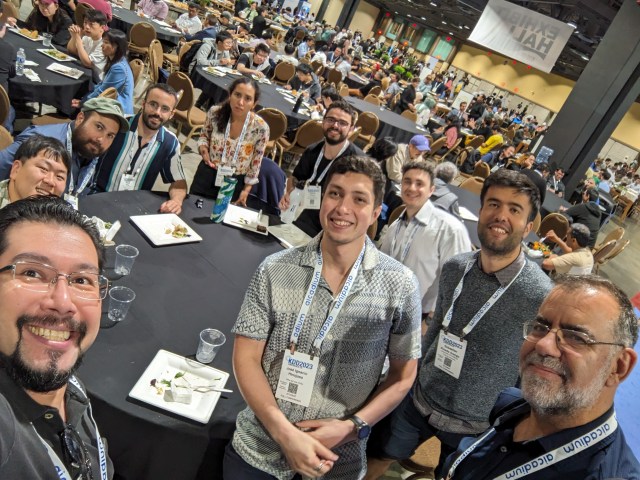
Overall, it was a great experience. Hopefully we’ll be able to attend to KDD 2024 in Barcelona!


